


Pain

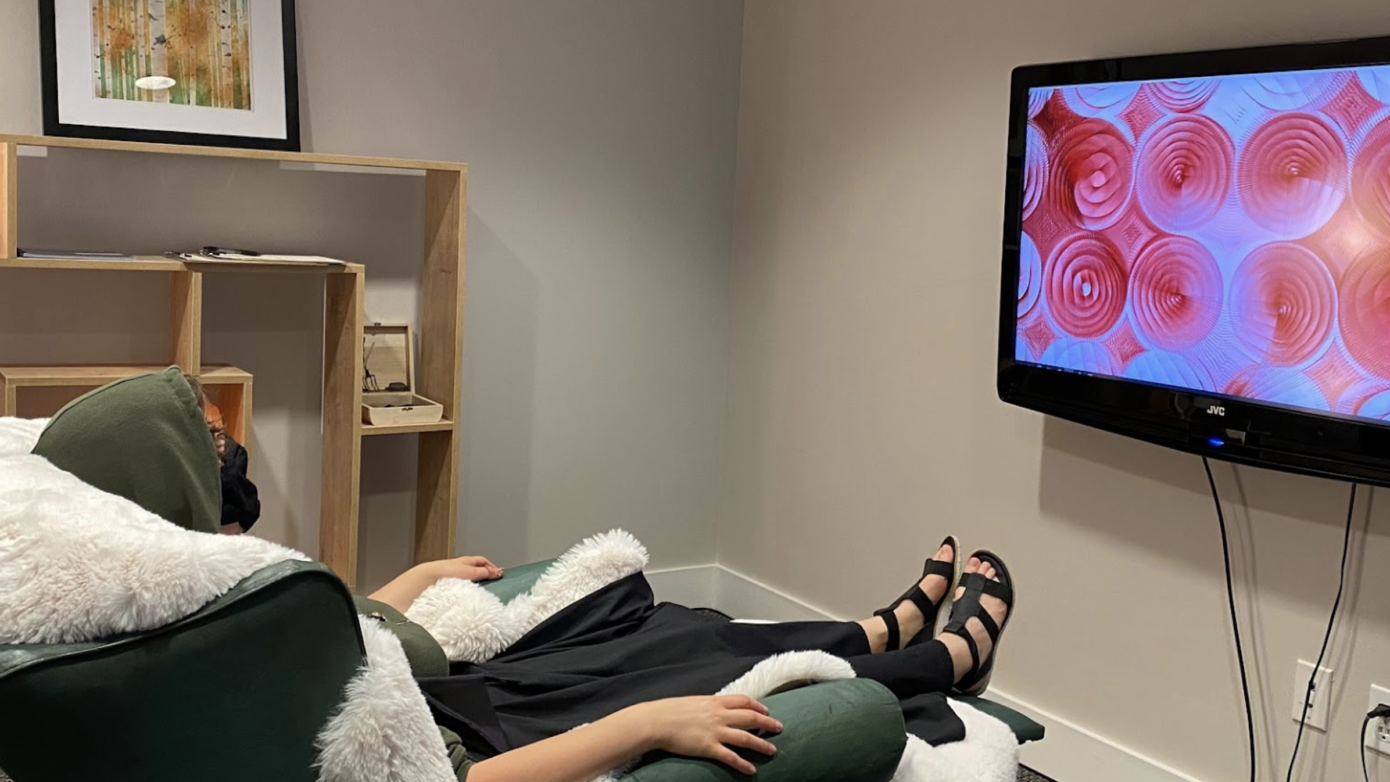
Woman doing NeurOptimal

Neurohacking: TMS vs. NeurOptimal®

Neurohacking: TMS vs. NeurOptimal® 2392 1740 Recovery Lounge & Spa

Neurohacking is all the buzz these days for improving mental performance and enhancing recovery time. If you’re curious, and start looking into Neurofeedback and Brain Balancing programs, you may quickly become overwhelmed by all of the options that are available to you.  And, it can be confusing to understand the similarities and differences between the different options. One type of treatment that several of our clients have tried and/or asked us about, is TMS, Transcranial Magnetic Stimulation, and how it compares to our Neurofeedback System, NeurOptimal®. Fortunately, our very own NeurOptimal® Associate has had firsthand experience working with patients as a technician for both of these modalities. We asked her to share her knowledge and experience working with clients using both systems and here’s what she had to say.

Neurofeedback and TMS are two modalities that I’d heard of, but never had first hand experience with – until recently. Both are noninvasive treatments to help influence the brain, and throughout the past year I’ve had the opportunity to observe the effects of each. In my short time working with TMS patients and neurofeedback clients, it’s been incredible to see the impact of both systems on individuals receiving them. Having helped operate both, here’s my honest review of the two. 

I worked for a mental health clinic in Denver last year, and there I became certified as a TMS technician. TMS stands for Transcranial Magnetic Stimulation, and it uses magnetic fields to influence brain activity. TMS operates using a magnetic coil to transfer electromagnetic pulses to help stimulate the brain cells. The electrical pulses are repetitive, and TMS has mainly been used to help treat depression. The vast majority of TMS patients suffer from one form of clinically diagnosed mental illness, such as depression, anxiety, bipolar disorder, etc; although TMS has been shown to successfully help treat these and other mental disorders. 

Though I found the process of TMS fascinating, I did have some skepticism as to its effectiveness. Out of all the patients I administered treatments to over a period of six months, a handful had significant success at the completion of their sessions. Not only is the process of receiving TMS daunting, there are hoops and hurdles to get through in qualifying with insurance companies. Depending on a person’s deductible having been met or not, the cost of their treatment could range anywhere from free to a few thousand dollars. So not only do you have to qualify through insurance to see if you can even receive TMS, but you could spend anywhere from five grand or more, for a treatment that may or may not give you the results you are hoping for.

TMS also comes with multiple side effects. The vast majority of clients receive headaches during the first few days for up to a week through their sessions, though with time these typically lessen or go away. They may also experience insomnia, increased anxiety, and dizziness during the process. The pulsing from the coil is uncomfortable and can sometimes cause calluses on the scalp, and can be described as painful for some individuals. A severe side effect can be seizure, however this is extremely rare and luckily I never had a client have one. TMS is also very demanding on a person’s schedule, for they typically need to show up 3-5 days a week for a couple months until their treatment is complete, or until their insurance date expires. Most folks have to take time off work or school, and typically insurance companies only allow a few months window of time to complete it. A treatment option like this is not always the most efficient or sustainable for a full-time student or a person without a flexible work schedule. 

There’s also the dip: a timeframe during treatment where patients’ mental health may regress or become worse than it previously was when they first came in. During my training we were initially told to disclose this information during initial appointments, however it never sat well with me. Essentially telling someone “Oh, by the way, during your TMS journey you may start to feel even worse than when you previously started” was already setting up a person for failure in my opinion. Most of these folks continuously have crippling depression and anxiety, and telling them on day one they’ll get even worse doesn’t exactly invoke a spark of confidence to them that it will ultimately work. Of course, I understood the reasoning behind telling them, if their dip were to occur they wouldn’t be blindsided nor possibly be as easy to doubt or regret the progress TMS has made up to that point. I’m a big believer in the placebo effect, and I noticed right away once patients were told they could get worse, they were never fully trustworthy of TMS from start to finish, as opposed to other patients who weren’t immediately told about the dip, their approach and outlook looked different. I get it, no one wants to be told something they’re paying a lot of money for and investing a lot of time in may not work right upfront. If I was receiving TMS, I wouldn’t want to hear that either. 

Despite all my criticisms of TMS, I have seen its positive attributes and believe in some cases it can be incredibly beneficial. I had one patient who quit using marijuana, had easier ways to cope with his anxiety, was no longer taking antidepressant medication, and got out of his shell and comfort level faster after TMS. He described it to be ‘life-changing’ for him. It can be the right treatment for some people, and I applaud those who take time out of their busy lives and money out of their pockets to invest in it, for it is an unnerving ordeal. It takes a lot of bravery and courage to seek out treatment. But in my mind and heart, working in direct correlation with massive pharmaceutical corporations, health insurance companies and psychiatrists who prescribe medication after medication, I knew there was another more holistic path to wellness that I was meant to embark on to help heal people. 

I have that opportunity now,  through Recovery Lounge and Spa here in Denver. As I mentioned before, neurofeedback was a concept I’ve heard of, but soon became familiar with their NeurOptimal® system and am now a Certified NeurOptimal® Trainer. Neurofeedback is another brain training tool that has similarities to TMS, yet is also vastly different. 

NeurOptimal® is Dynamical Neurofeedback, a type of brain training or biofeedback for your brain. NeurOptimal provides a person’s brain with feedback in real time by monitoring shifts in the person’s brain activity and mirroring or interrupting those patterns in the central nervous system through music and sound. NeurOptimal® trains a person’s brain to help their nervous system become more resilient and malleable. With NeurOptimal®, folks are hooked up to sensors on their ears and scalp with a type of paste that conducts EEG signals, while listening to an audio playlist. As the music is playing, there will occasionally be ‘scratches’ or ‘blips’ during the audio when the software is temporarily being interrupted and cuing your brain. These interruptions in the music are designed to give your brain information to help it self-correct and operate in a more efficient manner. Over time, people who use NeurOptimal® consistently tend to see significant changes or shifts and they typically see those changes or shifts at or around 20 sessions. So for NeurOptimal, 20 sessions at 1-2 sessions a week is the optimal target for more lasting results. 

A common type of neurofeedback known as linear or classical neurofeedback provides brain mapping, EEG’s, and requires monitoring to steer the brain in a specific direction with a targeted goal of balancing the brain. It also requires a diagnosis, which, unlike its NeurOptimal® counterpart, does not. NeurOptimal® is known as dynamical neurofeedback, where a person is receiving feedback in real-time rather than a pre-set program. It does not require a diagnosis or something to be ‘wrong’ with them in order to receive it. With NeurOptimal® there is no brain mapping and nothing is being taken out of or put into the brain and there are no programming decisions being made by a technician to force the brain to be trained in a specific direction. You simply put on your headphones, we place the sensors on, and your brain does its thing. 

With NeurOptimal® there’s no need to go through a lengthy process with your insurance company to qualify. There’s no need to have trialed multiple medications and no need for a formal diagnosis. What makes NeurOptimal® stand out is its ease of application, minimal to no side effects, and the benefit for many populations ranging from people suffering from TBIs including concussion, people looking to help improve their performance, sleep or memory, children with ADHD or lack of concentration in school, and people with mental health disorders.  

I’ve seen continual progress from clients I’ve worked with in NeurOptimal® and they all tell me the same thing: they’ve noticed something happening. They’re getting more sleep, their memory is better, they’re less anxious, they’re not getting headaches or migraines as frequently, their mood has improved. Subtle changes or shifts in concerns they had coming in for the first time, to people receiving regular maintenance can tell there is something to it. NeurOptimal® is also typically less pricier than TMS, and are only 33 minute sessions. Through Recovery Lounge and Spa, we also offer NeurOptimal® home rentals, so a person can still receive all the brain benefits in the comfort of their own home. There are no time constraints, no ticking countdown or an ‘end date’ to when you need to finish, for NeurOptimal® can always be started and stopped, used continuously or occasionally, to whatever needs fit someone the most. There’s no pain or discomfort, and no one is told right away “you’ll get worse before you get better.” 

The pros of NeurOptimal® seemingly outweigh any possible cons of TMS I’ve seen and experienced as a technician for both. Though I do not believe there is a ‘one size fits all’ when it comes to treatment or therapy or healing of any kind, I have seen more of a positive influence working with neurofeedback clients and their results from NeurOptimal®. They aren’t being told what to do and aren’t being told a problem cannot be solved or an issue cannot be fixed. Anyone can come and receive NeurOptimal® and do not need to completely break their wallet to do so. I’ll take small sensors on my scalp over a pulsing magnetic coil on it any day. I have no doubt either TMS or neurofeedback couldn’t work for one person or another, and these systems are being more widespread and becoming more mainstream which is encouraging to the masses, but to me, there’s less risk with NeurOptimal® and more hope and opportunity for real change consistently over time, versus a slightly more dramatic (possible) short boost of improvement.


To learn more about NeurOptimal® Dynamical Neurofeedback, check out this Explainer Video or schedule a FREE Virtual Consultation with one of our NeurOptimal® Trainers. 


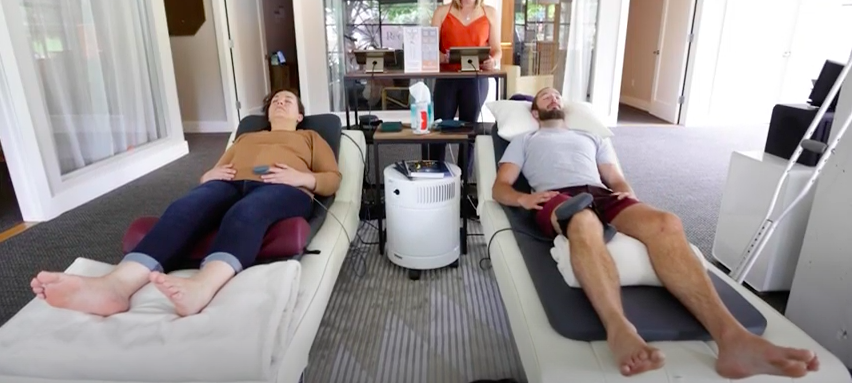
Two people laying on PEMF mats

Improve your Heart Health with PEMF Therapy

Improve your Heart Health with PEMF Therapy 852 383 Recovery Lounge & Spa
When customers come into Recovery Lounge & Spa for the first time, many of them do our Intro Special and try out three of our Recovery Services. When we ask our customers which service was their favorite, most often, it’s PEMF Therapy. A retired Vietnam veteran told us it’s “like a visit to the beach, a peaceful oasis.”  Our Pulsed Electromagnetic Field Therapy Mats with Far Infrared are designed to increase blood flow and supercharge the mitochondria. Users experience deep relaxation and pain relief but often wonder “What’s the Science behind PEMF?” February is the month of Love. In honor of the heart, we’d like to share a video testimonial by Dr. Jim Maynard, who shares his experience using PEMF Therapy to improve his heart health. Throughout the video testimonial, he refers to his Omnium1 PEMF Mat, which is the travel version of the iMRS Prime that we use here at Recovery Lounge & Spa. Dr. Jim Maynard is a 71-year-old retired optometric physician who retired in 2003 and had his first heart attack in 2006 due to a 98% block in one of his coronary arteries. Following his triple bypass surgery, he went on to have 4 more heart attacks over the next 4 years, experiencing greater pain and fatigue with each subsequent heart attack.  After watching Dr. Oz talk about PEMF Therapy, Dr. Jim Maynard purchased an Omnium1 in June 2017 and shares a testimonial of his experience with PEMF Therapy, how it has impacted his heart health, and the results he tracked through his Darkfield Microscopy exams.  

Time of Darkfield Microscopy Results:

Dr. Jim Maynard purchased an Omnium1 in June 2017 
  • 1st Blood Analysis in July 2017 (3 weeks after using Omnium1) – Result looked good.
  • 2nd Blood Analysis in Oct. 2017 (3 ½ months after using Omnium1) –Results looked even better.
  • 3rd Blood Analysis in March 2018 (3 weeks without using Omnium1) –‘DISASTER strikes’, he said.
  • 4th Blood Analysis in April 2018 (3 weeks after using Omnium1 again) – Back to dramatic improvement.
 

Questions for Dr. Jim Maynard about his blood flow analysis testimonial:

Am I understanding what he did? Did he use it, got well, stopped using it, and got sick again? Do you have to use PEMF for life? You would think that after using it so much you would have sustained improvement because you’ve created healthier cells? Can you explain this?  

Response from Dr. Jim Maynard:

If your goal is to improve cellular status, yes, you must continue it for life. Because, when you have coronary artery diseases, the cells are damaged at the stem cell level and PEMF (as far as I know) does not cause our cellular growth to reproduce healthier cells. 
  • The PEMF effectiveness is accomplished by improving the quality of the cells we have by making them more efficient at their job. 
  • It improves the wall thickness, allows cells to carry a higher volume of oxygen, and the magnetic effect on the iron (hemoglobin) keeps them from clumping with other cells. 
  • This produces a more efficient cellular function and thus improves shortness of breath along with providing our muscles and organs with more oxygen critical to metabolism and growth.
  It may be that there are disorders that are only temporary to begin with that once the PEMF brings them under control and returns them to normal that one can cease the use of the Omnium1. But that seems to be counter productive to me. Why would you want to discontinue something that helped you become healthier and improve your immunity or resistance to a disorder of any type? Now, I can say that missing a few days may not be critical as it took weeks for me to reach that frightening state again. I suspect the time before I would return to that state now may be longer than before. But I cannot know that without stopping and testing again. I’ll never do that again. The reason I did it then was because I wanted to see what the cells looked like prior to my beginning the Omnium1 Mat. Believe me, with my health issues of the past and the fact that I am now feeling healthier and looking younger than I have in many years, I have no desire to find out what might happen if I totally stopped. I feel much better also. I’ll never give up my Omnium1 Mat. EVEN my cardiologist is now looking into the studies and research. I can’t promise everybody my results. I was pretty bad off. But I’ve come a long way baby……….   Best wishes, Jim Maynard   The Omnium1 is the less expensive travel version of the iMRS Prime which is what we use, at Recovery Lounge & Spa. If you’re interested in renting or purchasing a Swiss Bionic PEMF mat, contact Sales@RecoveryLoungeandSpa.com

The Role of Diet in Chronic Inflammation & Pain

The Role of Diet in Chronic Inflammation & Pain 2560 1709 Recovery Lounge & Spa
I haven’t had any white sugar in over a year. People tend to respond with shock and/or disbelief, and will say things like, “I couldn’t do that,” or “Wow. You really have willpower,” or “That’s amazing!” The long and short of it is that sugar makes me feel really bad. I wish it didn’t. I wish I could indulge occasionally and have it be okay, but time after time my body shows me that it’s just not for me. I even have to limit the alternatives that I am able to tolerate: coconut sugar, agave, honey, and very occasional maple syrup. If I feel a rush or have a crash, I know it was too much. I have a slew of chronic health issues, most stemming from a mild traumatic brain injury I sustained a decade ago, and I have had to learn through trial and error what works for me and what doesn’t. When I started researching to try and gain an understanding of what was happening to me, I learned that inflammation was likely at the root of most of it. This article from Nature explains: “Although intermittent increases in inflammation are critical for survival during physical injury and infection, recent research has revealed that certain social, environmental and lifestyle factors can promote systemic chronic inflammation (SCI) that can, in turn, lead to several diseases that collectively represent the leading causes of disability and mortality worldwide, such as cardiovascular disease, cancer, diabetes mellitus, chronic kidney disease, non-alcoholic fatty liver disease and autoimmune and neurodegenerative disorders. In the present Perspective we describe the multi-level mechanisms underlying SCI and several risk factors that promote this health-damaging phenotype, including infections, physical inactivity, poor diet, environmental and industrial toxicants and psychological stress.” It was really fascinating to learn about, because as I moved out of the acute injury phase, one way that I described what was happening was that I felt stuck in fight or flight, and also, “It’s like my whole body went haywire.” Super technical terms, I know, but as it turns out, my whole body really DID go haywire. Early on I figured out that gluten was very inflammatory for me, and eliminating it from my diet had a huge positive impact. I also discovered which foods were causing allergic reactions and eliminated those as well. A lot of the experts say that dairy is inflammatory for everyone. I have found that organic, full fat dairy in moderation is okay for me. However, I can’t tolerate soy. Every body is different! Even though at the time I didn’t have this excellent advice from Dr. Mark Hyman, this is essentially what I did: 1. Eat a whole food, high fiber, plant-based diet which is inherently anti-inflammatory.⁣⁣ 2. Eat healthy fats from olive oil, nuts, avocados and omega 3 fats from small fish like sardines, herring, sable, and wild salmon.⁣⁣ 3. Exercise.⁣⁣ 4. Learn to actively relax to engage your vagus nerve, the powerful nerve that relaxes your whole body and lowers inflammation, by doing yoga, meditation, deep breathing or even taking a hot bath.⁣⁣ 5. If you have food allergies, find out what they are and stop eating them.⁣⁣ 6. Take probiotics (“good bacteria”) daily to help your digestion to improve the healthy bacteria in your gut which reduces inflammation.⁣⁣ 7. Take a multi-vitamin and mineral supplement which helps reduce inflammation.⁣ The holidays are a difficult time for needing to be on a specialized diet, whether that’s due to allergies, inflammation, preference, or other reasons. Over the years after letting go of the foods that are inflammatory for me, I’ve had to learn how to adapt. That often means I’m making and bringing my own food to gatherings, but over time I’ve gotten used to it, and I really have fun experimenting with making new versions of well-loved treats. I’ve had success creating an alternative recipe for my favorite ginger molasses cookies, and my next experiment is going to be homemade eggnog, as that is something that I definitely miss this time of year. What works for me is not going to work for everyone. Health is a very individual experience. However, if you are dealing with chronic health issues, taking a close look at diet, limiting or eliminating inflammatory foods, and optimizing your nutrition as you’re able can really help overall health. From there you can adapt traditions or create new ones! Learn more about anti-inflammatory foods from Harvard Health. In addition to diet changes, having access to our detoxifying and vagus nerve activating modalities (particularly NeurOptimal® and the infrared sauna) here at the Denver Recovery Lounge has also been key for me in attaining an anti-inflammatory lifestyle. I continue to see improvements and feel better and better each day!    
Back to top
Privacy Preferences

When you visit our website, it may store information through your browser from specific services, usually in the form of cookies. Here you can change your Privacy preferences. It is worth noting that blocking some types of cookies may impact your experience on our website and the services we are able to offer.

Click to enable/disable Google Analytics tracking code.
Click to enable/disable Google Fonts.
Click to enable/disable Google Maps.
Click to enable/disable video embeds.
Our website uses cookies, mainly from 3rd party services. Define your Privacy Preferences and/or agree to our use of cookies.